

Why ESG Monitoring Matters
For Oil & Gas operators, sustainability commitments are no longer optional — they're auditable. PETRONAS' Net Zero Carbon Emissions 2050 commitment, international methane intensity targets, and tightening ESG disclosure requirements all demand the same thing: continuous, verifiable data on emissions, energy use, and asset performance.
Cahaya Hornbill closes the gap between commitment and verification. With our technology arm Meshteq, we deliver integrated ESG monitoring solutions that turn operational data into auditable sustainability evidence.
Methane & Fugitive Emissions
Smart LDAR and optical gas imaging detect and quantify methane and VOC emissions before they impact intensity targets.
Real-Time Operational Data
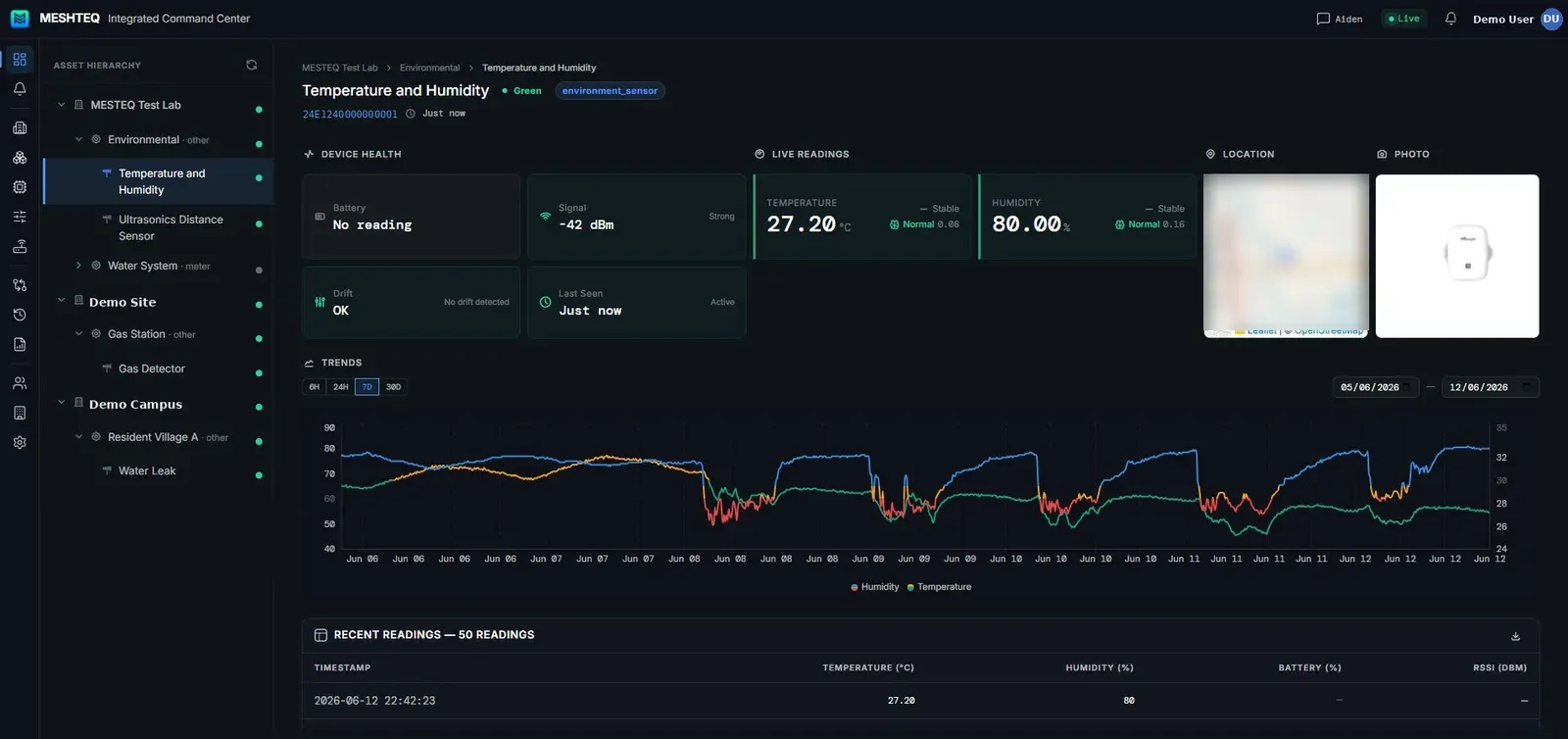
The MICC dashboard aggregates emissions, energy, and asset health data into a single source of truth — for operations, sustainability teams, and external reporting.
Auditable Reporting
Continuous data with time-stamped, location-tagged records supports GRI, TCFD, IPIECA, and corporate sustainability disclosures.
Fugitive Emissions & Methane Monitoring
Optical Gas Imaging (OGI) cameras detect fugitive emissions in real time — methane, VOCs, refrigerants — across upstream platforms, gas plants, refineries, and petrochemical facilities. Structured Smart LDAR programmes generate the time- and location-tagged emissions records that sustainability reporting frameworks demand.
For operators with methane intensity targets, this is the difference between “we estimate emissions from fugitives” and “we measured, logged, and resolved identified leaks in [period].” LDAR and OGI capabilities form part of our broader asset integrity service line.
Real-Time ESG Dashboard
The Meshteq Integrated Command Centre (MICC) — built on industrial IoT and AI — aggregates emissions, asset health, energy consumption, and environmental conditions into a single dashboard. Data flows to operations, sustainability teams, and external reporting in formats they can use.
Configurable for:
- Scope 1 — direct emissions (combustion, fugitives, venting/flaring)
- Scope 2 — purchased energy use and intensity per unit of production
- Asset performance — health indicators that drive predictive maintenance decisions and reduce unplanned downtime
- Environmental conditions — air quality, water quality, noise where sensors are deployed
The dashboard is delivered through our IoT & Digitalization platform.
Predictive Maintenance Supports ESG
Predictive maintenance reduces unplanned downtime, premature replacement, and emergency repair cycles — the operational realities that drive Scope 3 supply chain emissions and accelerate asset write-offs. Done right, PdM extends asset life, reduces material waste, and supports circular economy objectives.
Our predictive maintenance and Reliability-as-a-Service (RaaS) capability is detailed under Reliability Engineering & Asset Management.
Aligned with Industry Frameworks
Built on global sustainability frameworks: GRI (Global Reporting Initiative), TCFD (Task Force on Climate-related Financial Disclosures), IPIECA (Oil & Gas Industry Sustainability Reporting), and Malaysia-specific sustainability commitments including PETRONAS' Net Zero Carbon Emissions 2050 framework.
Our solutions are designed to feed corporate sustainability reporting systems with the auditable, time-stamped data those frameworks require.
Need to report ESG data across your supply chain? See our dedicated SEDG Readiness offering — structured ESG disclosure for SMEs aligned to the Simplified ESG Disclosure Guide (SEDG) V2, Capital Markets Malaysia.